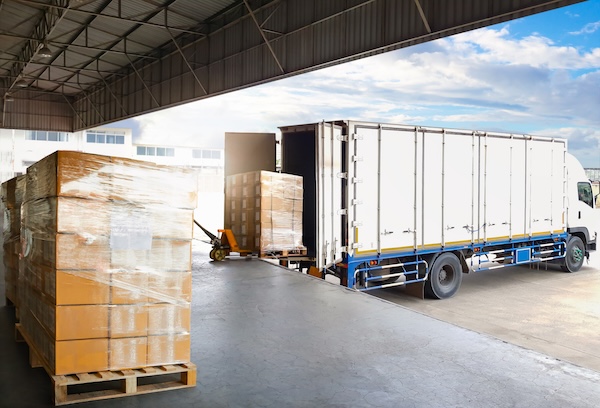
Walk through any plant and you’ll see bins of scrap, bales of stretch wrap, pallets stacked by the dock waiting for the hauler. Most operations treat that material as a cost to control. But what if the waste leaving your facility is actually a product waiting for the right process to unlock it?
One of our customers recently reminded us of that in a way we have not stopped thinking about. He is an inventor working in plastics recovery, and he puts it simply: there is no such thing as single-use plastic. The molecules in a torn dry cleaning bag are the same molecules they were the day that film was made. Nothing about the material changed. What changed is whether anyone has the vision, and the equipment, to bring it back. As a manufacturer of American made industrial shredders, that idea sits at the heart of everything we build.
The Hardest Material in Recycling
Rigid plastics have a well-worn path back into manufacturing. Film and flexibles do not. The pallet wrap on your dock, the packaging around bread and meat in every grocery aisle, the bag your dry cleaning comes home in. These materials are rich in valuable polyethylene, yet most of them still go to the landfill, simply because they are hard to process.
Our customer knows that better than most. He spent years walking trade shows across Europe and the Americas looking for equipment that could handle flexibles in a single pass. He found plenty of world class industrial grinders built for rigids. Some of the largest petrochemical companies in the world had attempted the same challenge and walked away saying it could not be done. Then a partner pointed him to a plant outside Chicago.
From Waste Stream to Feedstock
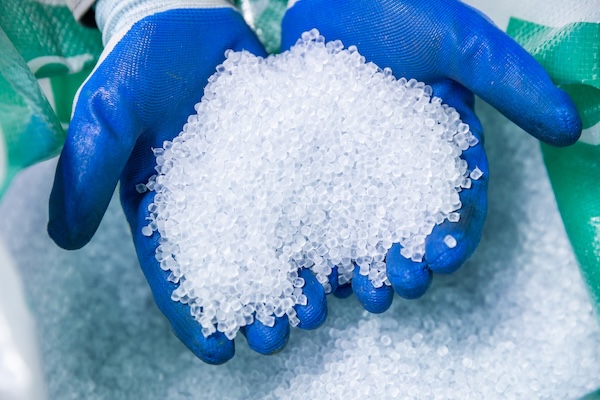
The breakthrough came when plastic film recycling stopped requiring two or three stages and started happening in one. With a Cresswood shredder integrated into his line, he could reduce film and flexible packaging into a clean, consistent feedstock and pelletize it to near-identical specifications as virgin resin. Size, weight, specific gravity, hardness. Pellets that meet the specs manufacturers actually write, produced at multiple tons per hour instead of laboratory quantities.
Proof You Can Stand On
To show what restored plastic can do, he made a pallet. Not a display piece. A pallet that held a 2,800-pound bale of waste plastic, with six people standing on top for good measure. When he showed the photo to executives at one of the world’s largest chemical companies, the punchline landed: what is on the pallet is what made the pallet.
Consider the scale of that opportunity. Roughly two billion pallets move through American transportation and warehousing, and about half a billion get replaced every year. It is a market our pallet recycling shredders already serve from the other direction, recovering material from pallets at the end of their service life.
What Real Sustainability Looks Like
When we asked him what real sustainability means, his answer was refreshingly plain. Things that do what they say they do. We appreciate that, because it is how we think about our own work. We do not market ourselves as an environmental company. We are a family-owned equipment manufacturer. But the machines we build, from plastic recycling pre-shredders to complete size-reduction systems, are quietly helping solve one of the toughest pollution problems there is. Turning film and flexibles from landfill material into renewable products.
Your Waste Stream Might Be Your Next Product
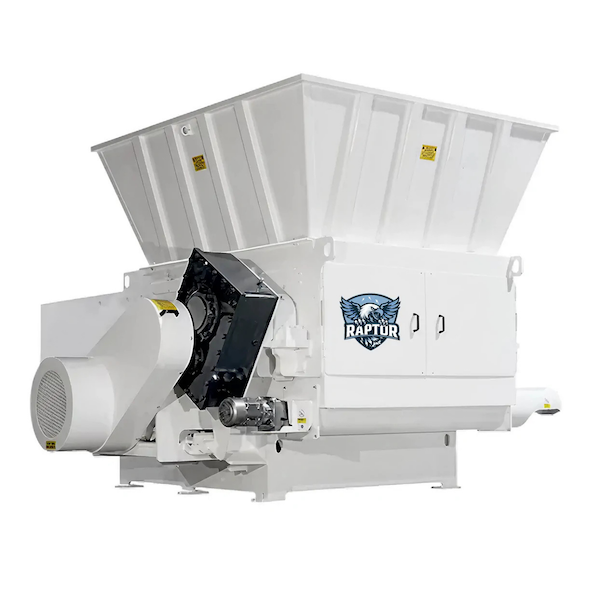
Our customer is now scaling toward higher capacity and FM certification, with plans to share his results at NPE 2027. We are proud that our plastic film shredders are part of a line proving that waste is not the end of a material’s story. So, take another look at what leaves your dock every week. If there is a hard size-reduction problem hiding in it, whether plastics, wood, or paper, connect with Cresswood. We would love to think alongside you. That is how breakthroughs happen.
Recent Comments