Every wood manufacturer knows what labor costs. What fewer have measured is how much of that labor is spent on something that adds zero value to the product: moving scrap.
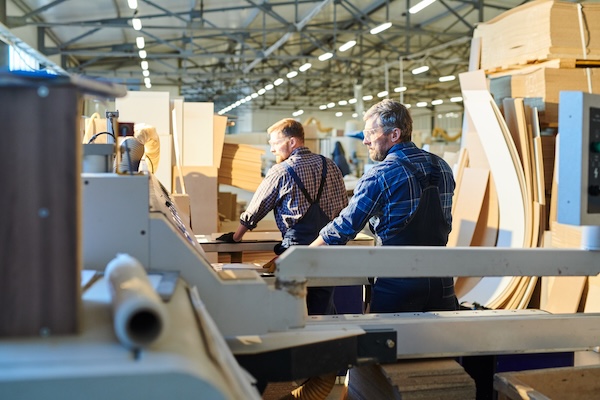
Walk through most cabinet shops or woodworking plants, and you will see skilled operators stepping away from machines to bundle rippings, stack cutoffs into bins, or wait for a fork truck to clear a path. In a market where finding and keeping good people is already one of the hardest problems in manufacturing, those hours matter. They are not producing parts. They are not serving customers. They are managing waste.
The manufacturers pulling ahead right now are the ones who stopped treating scrap handling as something everyone pitches in on and started treating it as an engineering problem with a real solution.
The Hidden Labor Costs Most Plants Never Measure
Ask a plant manager what their scrap disposal costs are, and most can give you a number. Ask how many labor hours per shift go toward handling that scrap, and the answer gets vague. That is because the cost is spread across dozens of small tasks that never appear on a single line item.
The truth is, we become blind to things we see every day. They just become how things are. But when you stand and observe a work cell with an owner or plant manager and point out everything the operator is doing to manage scrap, it opens their eyes to something they normally did not take the time to see or consider. In lean manufacturing, this is called “going to the Gemba”: observing where the work is actually performed. All the time spent on handling scrap and work-arounds often comes as an unpleasant surprise, but it is the beginning of understanding how to improve and streamline labor resources.
Here is what it actually looks like on the floor:
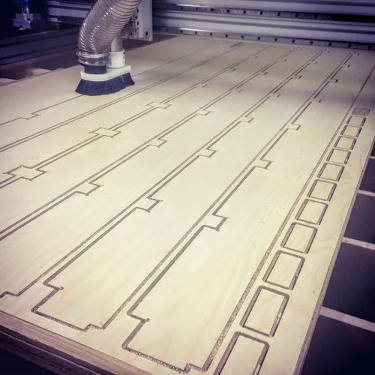
An operator finishes a run on a CNC router. Rippings pile up. He stops, gathers the material, carries it to a bin or bundles it for later pickup. A fork truck driver repositions containers so they do not block aisles. Someone bands scrap for the hauler. Another person manages the dumpster rotation outside.
2. You’ve Experienced Contamination or Quality Issues from Returned Material
None of those people were hired to do that work. But collectively, it consumes hours every day that should be going toward production. For cabinet making companies running lean teams, that lost time hits twice: once in direct labor cost and again in reduced throughput.
Part of that conversation is also what the company is currently paying for haul-away fees, or whether they have a buyer for their wood waste. Sometimes the only way to find a buyer is to produce a clean and uniform end product. If a plant is just filling up 40-yard containers with bulk wood waste, it is virtually impossible to find a purchaser. And bulk wood waste does not fill a container efficiently either, so size reduction helps on both fronts: it creates a sellable product and maximizes what fits in each haul.
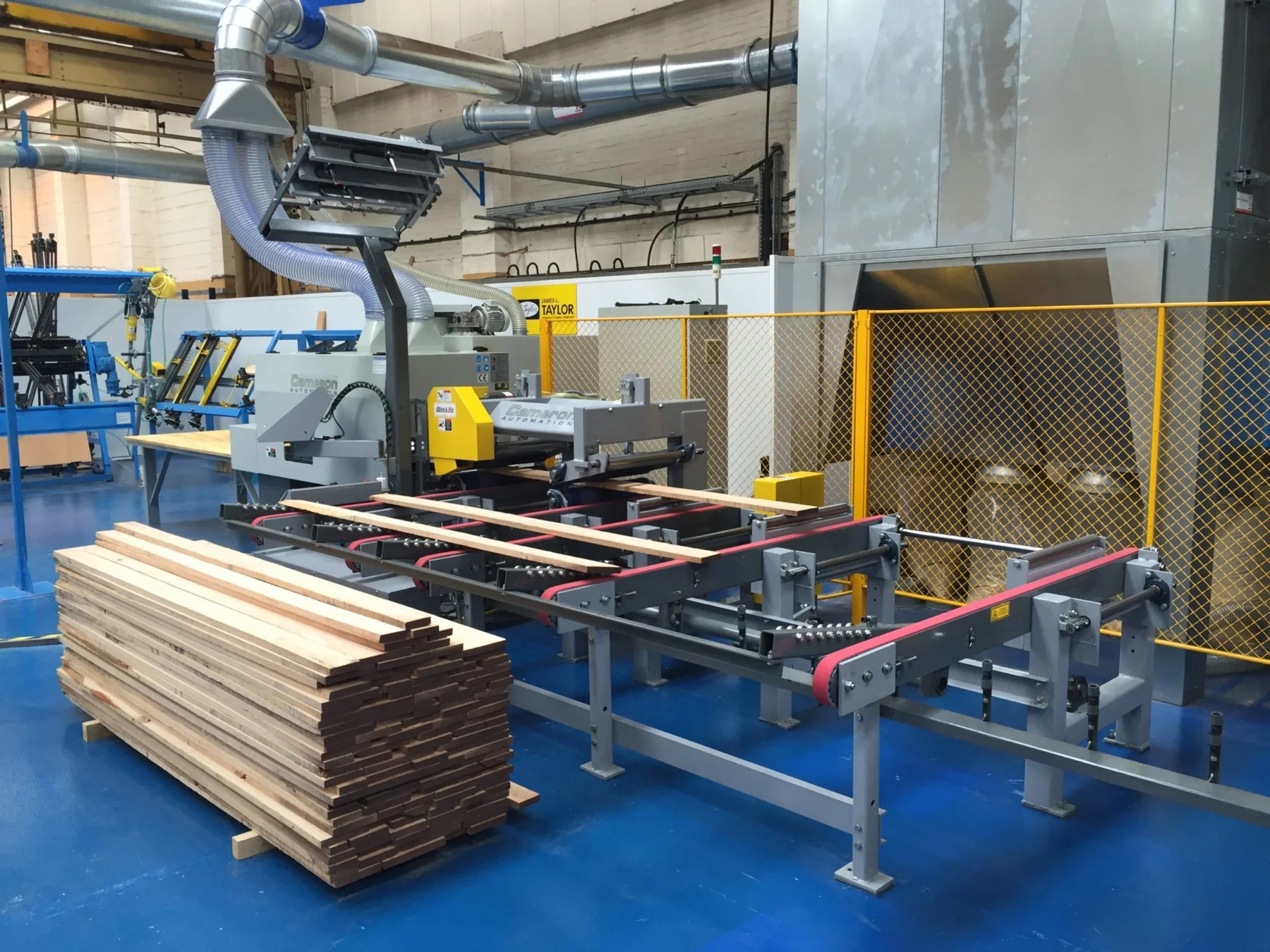
Image courtesy of Cameron Automation
Zone Grinding: Solving the Problem Where It Starts
The most effective approach gaining traction across wood manufacturing is zone grinding. The concept is straightforward: instead of moving all scrap material to a centralized location for processing, you handle it at the source.
A right-sized grinder is placed within each work cell or CNC area. Rippings, cutoffs, and dimensional rejects feed directly into the grinder as they are produced. The processed material routes through a vibratory conveyor into the existing dust collection or pneumatic system. The scrap never touches the floor. No bins. No bundles. No fork trucks shuttling waste across the shop.
The goal with zone grinding is not about reducing headcount. It is about maximizing the value-add of the skilled positions already in the shop. Finding a good worker for a CNC router or rip line is more difficult than ever, so the more product they can manufacture in a given hour is critical to staying competitive. Every minute taken to move scrap from the work cell is a minute lost and never found again.
Some companies try to solve this by dedicating fork truck drivers just to remove the burden on operators. But that is not really solving the problem. It is merely adding more cost, not only in terms of labor, but also in expensive equipment maintenance. Zone grinding eliminates the need entirely by engineering the scrap out of the workflow at the source.
For shops already investing in wood recycling shredders as part of a centralized system, zone grinding does not replace that equipment. It complements it by catching the material that never should have been carried across the plant in the first place.
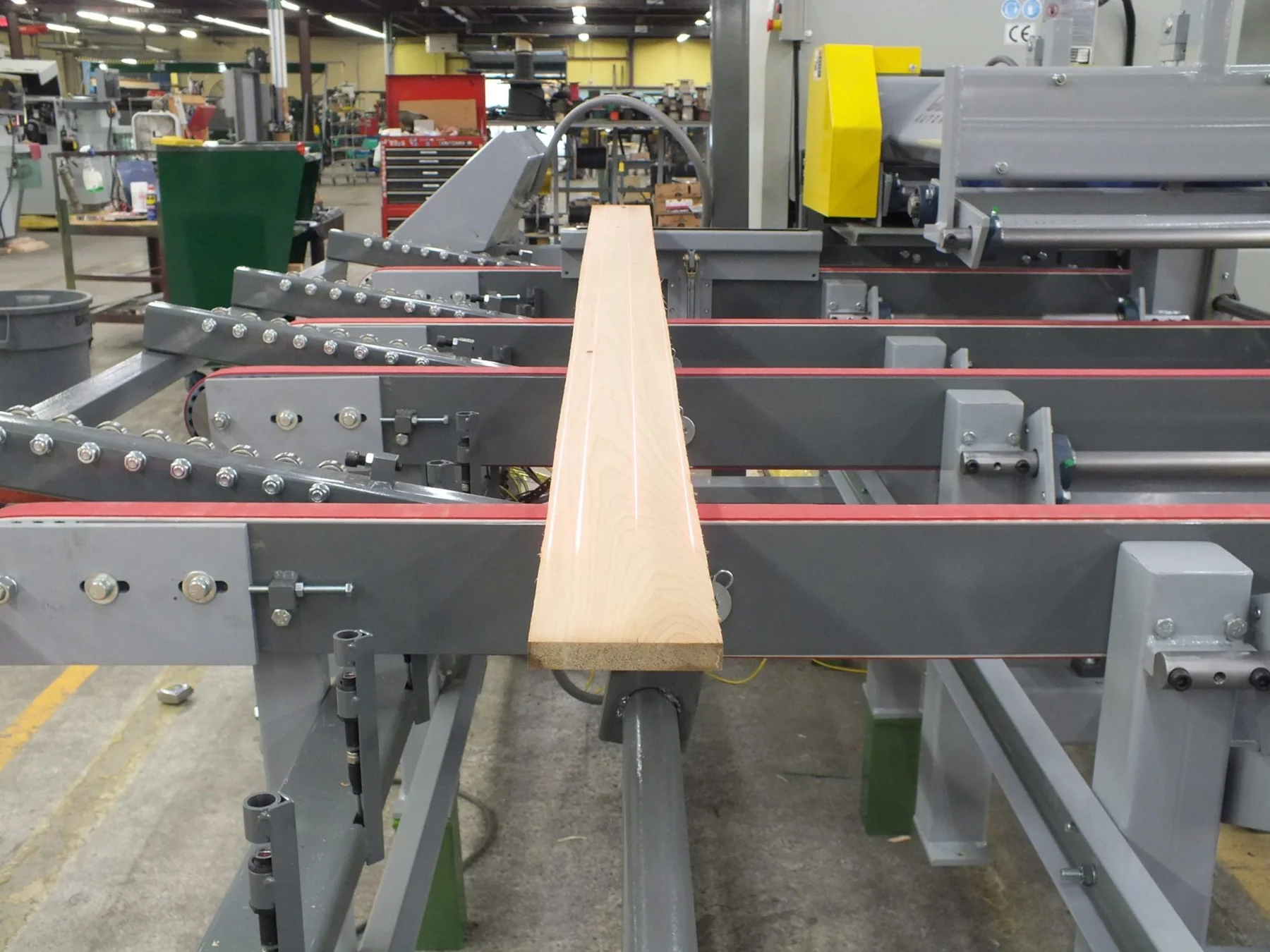
Image courtesy of Cameron Automation
What a Customized System Actually Looks Like
No two plants generate scrap the same way. A cabinet shop running multiple nested CNC routers has different volume, material types, and layout constraints than a flooring manufacturer dealing with long rippings or a millwork company processing dimensional rejects.
That is why the system has to be engineered around the plant, not the other way around. The most effective solutions combine multiple technologies working together: shredders sized for the specific material and volume at each zone, conveyors that move processed material without manual intervention, hammermills for applications requiring finer, more uniform particle size, and air systems or pneumatic conveyance that tie everything into existing dust collection infrastructure.
As a manufacturer of American-made industrial shredders, Cresswood engineers these systems from the ground up. Each layout accounts for material type, generation rate, available floor space, and the downstream handling path. When those components are designed as a unified system rather than purchased as individual machines, the result is material flow that operates autonomously. The scrap leaves the work cell without anyone touching it. The processed output moves to the collection point or trailer without a fork truck involved. Labor goes back to production where it belongs.
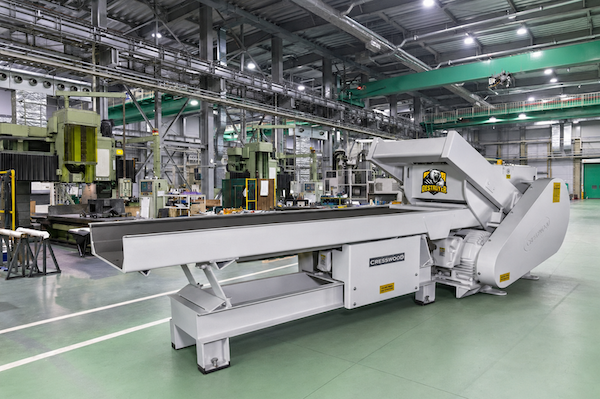
Cresswood Destroyer – EF-24 Wood
The Real ROI Is Not Just in Disposal Savings
Most manufacturers start evaluating scrap handling solutions by looking at tipping fees and hauling costs. Those savings are real, but they are often the smallest part of the equation.
The larger payoff is in recovered labor hours. When operators stay on their machines instead of managing waste, cycle times improve. When fork trucks stop running scrap routes, traffic flow gets safer and floor space opens up. When bundles and bins disappear from production areas, the plant runs cleaner and supervisors spend less time managing logistics that should not exist.
It is getting more difficult to find and retain good people in operations, and management is typically all ears when it comes to getting more out of the people they have without adding headcount. For wood manufacturers running second shifts or considering additional hires just to keep up with demand, recapturing those lost hours can delay or eliminate the need for more headcount altogether.
For facilities processing pallet material alongside production scrap, pallet recycling shredders can serve double duty, handling incoming pallet waste while integrating with the same conveyance and collection systems that manage production scrap. That consolidation reduces equipment footprint and simplifies the material flow into a single engineered process.
Why Equipment Quality Changes the Labor Equation
A scrap handling system only saves labor if it runs. When a grinder goes down on a production line, the ripple effect is immediate: scrap piles up, operators stop feeding the system, and manual handling starts all over again. Uptime is not a feature. It is the foundation of every labor savings calculation.
That is why world class industrial grinders built for continuous duty matter in this conversation. The single-shaft, low-RPM design that Cresswood has refined over six decades is engineered specifically for the punishing daily use these systems demand. Fewer unplanned stops means the labor savings you projected on paper actually show up on the floor.
For operations generating a steady mix of rippings, cutoffs, sanding dust, and dimensional rejects, wood waste recycling shredders designed for that exact material profile deliver consistent particle size without the plugging, jamming, and maintenance interruptions that turn a labor-saving investment into a labor-adding headache.
Questions Worth Asking Before Your Next Equipment Decision
If your team is evaluating how to reduce labor tied to scrap handling, start by measuring what you are actually spending today. Not just the line item for disposal, but the time:
- How many minutes per shift does each operator spend managing scrap instead of running parts?
- How many fork truck trips per day are dedicated to moving waste material?
- How much floor space is consumed by bins, bundles, and containers that serve no production purpose?
- Are skilled people doing work that an engineered system could eliminate entirely?
The answers usually reveal a bigger opportunity than expected. In many plants, the labor cost of managing scrap significantly outweighs the disposal cost itself. Go to the Gemba. Stand in the work cell, observe what is actually happening, and measure the real cost of what has become invisible through familiarity.
See It in Person at IWF Atlanta 2026
For manufacturers ready to solve this problem, IWF Atlanta 2026 (August 24 through 28) is the right place to have that conversation. Cresswood’s team will be on the floor, including sales and engineering, ready to walk through your specific layout, material types, and production challenges.
The best conversations at IWF happen when teams arrive knowing what to fix. If your plant is spending too much labor on material that should be handling itself, bring your numbers, your layout, and your questions. We will bring the engineering experience to turn that into a system that works.
Want to get ahead of the show? Call us at (800) 962-7302 or connect with our team online.
Find the Right Wood Scrap Handling System for Your Operation
Tell us about your material, production volume, current workflow, and labor challenges. Cresswood’s team can help you evaluate a customized scrap handling and size-reduction solution for your facility.
Recent Comments