PACK EXPO International returns to McCormick Place in Chicago October 18-21, 2026. More than 2,700 suppliers will be there, along with plant managers, engineers, operations leaders, and purchasing teams from across packaging and processing. The show only happens every two years, so it’s the best chance to see equipment in person, compare options, and move projects forward.
If packaging scrap is costing your plant time, floor space, or money, this year’s show is a good time to talk it through. Ryan Butzman, President of Cresswood Shredding Machinery, and Max Fadin of the Cresswood sales team will be in Chicago to meet with manufacturers about their scrap streams. They’ll focus on plastic film, flexible packaging, paper, and other packaging scrap.
Cresswood Works With More Than Wood
Many people in packaging know Cresswood for wood and pallet recycling. Our American-made industrial shredders have been built in Cortland, Illinois, for decades. Over the past several years, though, more of our work has come from packaging operations.
At PACK EXPO International 2024, we met many attendees who were surprised to learn how much paper and plastic we process. At PACK EXPO Las Vegas 2025, the same topics came up again and again: paper cores piling up, stretch wrap clogging docks, and corrugated that needed size reduction before baling. Those conversations shaped what we’re bringing to Chicago this year.
Where Packaging Scrap Holds Plants Back
Plastic Film and Flexible Packaging
Film is one of the hardest materials to size-reduce. It stretches instead of cutting, wraps around rotors, and causes downtime. Most general-purpose machines weren’t designed for it. Cresswood’s approach to plastic film recycling starts with the rotor. Our Raptor series of plastic film recycling machines uses a film-specific row geometry and very tight, adjustable tooling clearances to keep stretch wrap, flexible packaging, agricultural film, and plastic banding in the cutting zone.
That rotor design came out of years of testing cutterhead geometry and tooling clearances on real stretch wrap and flexible packaging. You can see how that work came together in our approach to innovative plastic film recycling. It matters on the plant floor. A generic grinder tends to wrap, stall, and need constant clearing, while purpose-built plastic film shredders keep material moving. That’s a big reason manufacturers are solving their plastic and film recycling pain points by moving away from one-size-fits-all equipment. Done right, film can be worth more than the cost of hauling it away. One customer used plastic film recycling shredders to turn post-use film into pellets that meet virgin-resin specifications, proof that waste is an opportunity waiting for the right innovation.
Rigid Plastics and Production Scrap
Purgings, trim, totes, and other rigid scrap need a dependable first stage of size reduction before granulation. Cresswood plastic recycling pre-shredders feed downstream equipment a steady, even flow of material. If you’re paying an outside processor today, run the numbers. Hauling fees, contaminated regrind, and losing control of your schedule all add up, and bringing plastic shredding in-house instead of relying on outsourced haul-away can pay off sooner than many plants expect. Rising volumes, climbing collection costs, and quality complaints are all signs it’s time to move to your own shredding equipment.
Paper, Corrugated and Paper Cores
Balers increase density, but they don’t break material down. Shredding before baling produces denser bales and reduces handling. Cresswood paper recycling shredders process paper, cardboard, and print waste. A dedicated paper core recycling shredder handles the thick-walled cores that tend to stack up on plant floors. Put the right shredder in front of your baler and paper scrap becomes a cleaner, denser commodity with fewer trips to the dock. With smarter systems, plants can turn paper waste into profit instead of carrying it as just another disposal cost.
Cresswood Solutions for Packaging Scrap
Every material behaves differently in the cutting chamber. That’s why Cresswood builds film, plastic, and paper machines around different cutterheads, tooling, and feed systems instead of one machine for everything. Here’s how we match the solution to the material:
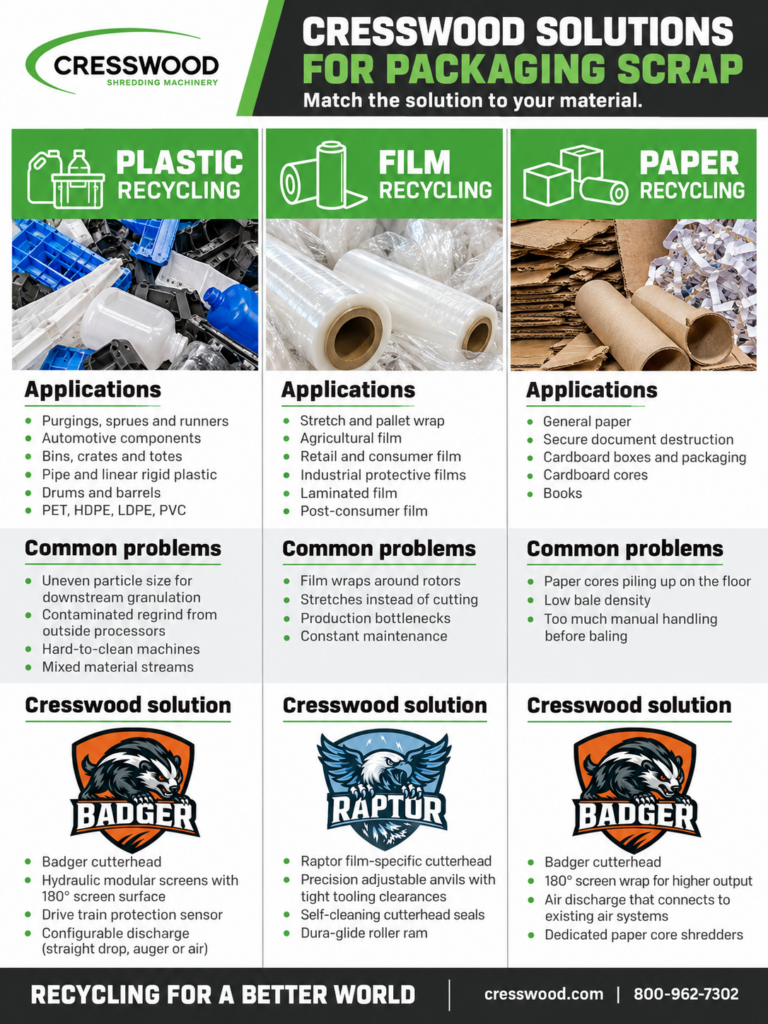
Download the Cresswood Solution Sheet for your material:
Film Recycling Solutions (PDF)
Plastic Recycling Solutions (PDF)
Paper Recycling Solutions (PDF)
Every system can include primary and secondary size reduction, custom material handling, infeed and discharge conveyors, metal detection and separation, dust collection, controls integration, mechanical installation, and operator and maintenance training. Bring your material questions to Ryan and Max at PACK EXPO, and they’ll help you map out the right setup.
Three Questions to Bring to the Show
1. Where is scrap slowing production?
Look for the spots where scrap piles up: bins next to a line, bales of stretch wrap by the dock, cores stacked in a corner, or operators pulled off production to move waste. Those bottlenecks are often where the best return on equipment is, and with peak season underway, every hour of downtime costs more. Heading into Q4, downtime gets expensive fast, so it’s worth checking wear parts, screens, and maintenance schedules now, before a breakdown hits in the middle of a rush.
2. Can your current grinder handle your material and volume?
A machine that runs rigid plastic well may struggle with film. One that kept up two years ago may not keep up with today’s output. Frequent wrapping, plugging, knife wear, or unplanned stops usually mean the equipment and the material aren’t a good match.
3. What should you consider before adding or replacing equipment?
Start with your material mix, pounds per hour, available floor space, and what happens downstream, whether that’s baling, granulation, pelletizing, or resale. Then look past the purchase price to the total cost of ownership: tooling, parts availability, service response, and energy use. Our world-class industrial grinders are engineered to order and backed by a Midwestern team, so parts and service arrive in days instead of weeks.
Make the Conversation Count
Come prepared. Photos of your scrap, a rough sense of your volume per shift, your current hauling or toll-processing costs, and a description of your downstream process will make for a more useful discussion. If a material looks difficult, we can run samples at our Cortland facility so you can see the output before you commit to anything.
Meet Ryan and Max in Chicago
Cresswood is sharing a booth with our dealer partner ACS Group at Booth # LU-7657, McCormick Place, Chicago, October 18-21, 2026. Stop by to talk with Ryan Butzman and Max Fadin about your plastic film, flexible packaging, paper, or other packaging scrap.
To set a meeting time before the show, call 800-962-7302 or fill out the form below. If you haven’t registered yet, visit PACK EXPO International.
Recent Comments