

Earth Day in Manufacturing: 5 Ways Recycling Equipment Reduces Landfill Waste
Earth Day tends to focus on what people do at home. But in manufacturing, waste is counted in tons, not cans, and the most meaningful changes happen on the plant floor. If you are responsible for operations, sustainability, or profitability, this is a good time to take a hard look at how scrap moves through your facility and what it is costing you.
Manufacturers that are ahead of this curve are not just updating their messaging around Earth Day. They are rethinking how waste is handled at the source, using industrial shredders and grinders to capture, size, and redirect material that used to go straight into a dumpster.
From Dumpster Problem to Material Stream
In most plants, waste handling grew one small decision at a time. A new product line came in, another container showed up out back, a hauler contract was renewed, and before long thousands of dollars a month were locked into landfill fees that felt like a fixed cost.
Recycling equipment changes that picture. When you size and consolidate scrap at the point of generation, you move from a messy, high-touch chore to a controlled material stream. That stream can be measured, improved, and in many cases turned into a saleable commodity or a usable input back into production. That is the kind of progress that holds up long after Earth Day has passed.

Five Ways Recycling Equipment Cuts Landfill Waste
When manufacturers invest in purpose-built shredders and grinders, a few patterns show up consistently on the plant floor.
- More material is recovered. Wood recycling shredders and plastic film recycling shredders size and sort scrap at the source instead of letting it mix into general waste.
- Haul frequency drops. Material consolidated at the point of generation means fewer containers, fewer pickups, and lower disposal costs.
- Production areas stay cleaner. When scrap follows a defined path instead of piling up beside machines, the whole floor runs more consistently.
- Waste stream data improves. A repeatable process generates measurable data, which makes it easier to set and hit diversion targets.
- Sustainability claims get grounded in real numbers. When customers or partners ask about environmental impact, you have plant floor results to point to, not just intentions in a report.
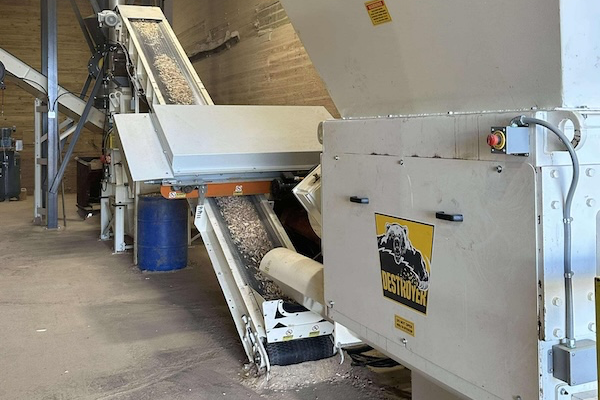
These gains come from straightforward decisions. A wood waste recycling shredder at the end of a line, plastic film recycling machines near a packaging area, a conveyor moving offcuts to a central bin. Every shift follows the same process, so performance is repeatable rather than dependent on whoever happened to clean up that day.
Building Something That Lasts Beyond One Day a Year
Earth Day is a useful prompt, but the plants that make real progress treat it as a checkpoint rather than a campaign. That means building systems that hold up in actual manufacturing conditions, not just ones that look good in an announcement.
Equipment needs to handle inconsistent, heavy, and abrasive materials without chronic downtime. It needs to integrate safely into existing lines and stay functional as volume and product mix shift over time. And it requires a partner that understands how a plant actually operates day in and day out.
Cresswood designs and builds American made industrial shredders and recycling systems specifically for this kind of environment. The goal is equipment that earns its keep every shift, not just in April.
The Question Worth Asking
If you were designing your plant today, with current cost pressures and customer expectations in mind, would you build the same waste streams you have now? Most plant leaders would say no. That gap is where recycling equipment does its best work.
Start by walking your floor and tracing where your scrap actually goes. Then talk to someone who can help you match the right equipment to your materials, footprint, and throughput. The goal is to have real results to point to by this time next year.
Recent Comments