
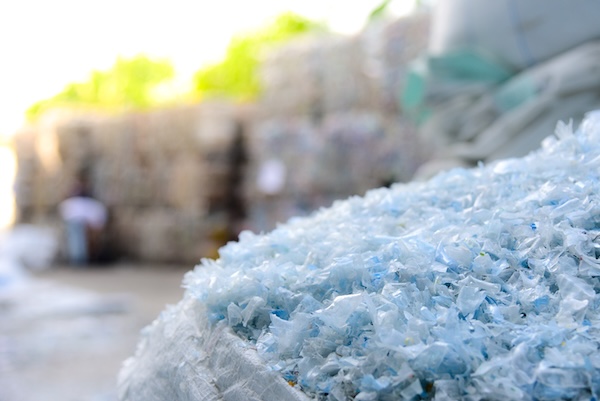
Manufacturers want to recycle more plastic scrap in house, reduce waste hauling costs, and feed clean regrind back into production. The challenge is getting plastic and film to run consistently instead of fighting plugging, knife wear, and unplanned downtime.
If you are evaluating plastic film recycling machines or improving an existing line, this overview will help you ask better questions and decide when it makes sense to work with a specialist like Cresswood.
Why Plastic Scrap Is Not One Material
“Plastic” is not a single material, it is a family of polymers with very different behaviors. Some grades are hard and rigid, like purgings, pallets, bottles, and heavy duty totes. Others are soft, flexible, and stretchy, like packaging films.
Rigid plastics often run well in a V rotor style shredder similar to what many plants already use for paper, if the rotor, screen, and drive are sized correctly.
Film behaves very differently inside the chamber. It stretches, wraps, and tries to pull itself into openings it should never reach. Expecting one generic shredder to handle purgings, pallets, and thin film with the same tooling is usually where in house recycling projects start to struggle.
Where Plastic Film Recycling Projects Go Wrong
Plastic film is thin, low density, and highly elastic. If the shredder was not engineered specifically for film the business case for recycling breaks down.
Purpose-built plastic film recycling shredders address this at the design level. Tight tooling clearances keep film in the cutting zone instead of letting it migrate into the screen area.
At Cresswood, inclined stationary knives are adjustable so the cutting inserts and knives can be brought into very close proximity, around 0.015 inches, which increases shearing action on flexible material and helps the shredder stay clear and productive.
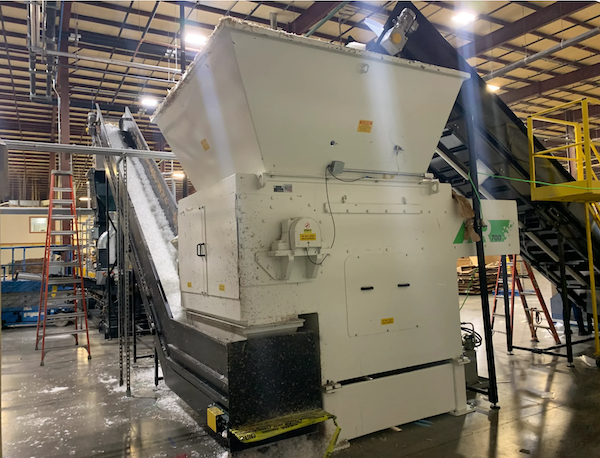
Because those clearances are tight, the rotor needs a special bearing arrangement that prevents lateral movement. Any side-to-side play can close the gap, cause contact, and damage tooling.
The cutterhead geometry is also specific to film. The rows of teeth are engineered for how film feeds, shears, and discharges instead of borrowing rotor designs from wood, paper, or rigid plastics.
Business Outcomes Manufacturers Can Expect
- Less downtime caused by film wrapping, plugging, and drive stalls
- Lower waste hauling costs as more plastic and film stay in your in house recycling loop
- Higher quality, more consistent regrind that runs better in extrusion and molding
- Stronger support for corporate sustainability and landfill reduction goals
Looking ahead, the plants that win with plastic and film recycling will be the ones that treat material handling, shredding, and granulation as a connected system instead of a stand alone machine purchase.
If you want to solve specific plastic and film recycling pain points rather than chase a supposed silver bullet, connect with Cresswood to review your material streams, test both film and rigid plastics, and design a primary shredder and granulator system that fits your process. During that conversation we can go over real world examples of what the right equipment can do.
Recent Comments